The Liquid Substance
 When we were in Lisbon, we had to take a cab because of a transit strike. Elke asked the driver whether he spoke English, and indeed, like most people in Lisbon, he did. From there, we had a lively conversation about life in the city, with its ups and downs.
This reminded me of a science fiction story we both read in the early 90s, in which the narrator instructed a robotic driver “with conversation.” Curiously, both a self-driving car and a chatting computer are no longer science fiction in 2026.
“With conversation” has since become a running gag between Elke and me in these situations. But which story is it from?
Surely, ChatGPT knows, so I asked when we stopped at a street café later that day. Aside from the quote, I remember quite a few story details: The narrator visited a friend who had become incredibly rich by inventing a universal material based on water. I also recalled that it had a Russian angle (like many SF stories).
ChatGPT rattled off a series of stories, none of which matched. One was The Water Statues by Fletcher Pratt from New York. While not Russian, it was close to Russian sci-fi of that era. That sounded specific enough that I let it be and moved on.
Back home, I followed up and learned that Fletcher Pratt had never written a story titled The Water Statues. There is a book with that title by Swiss author Fleur Jaeggy, but it is not science fiction.
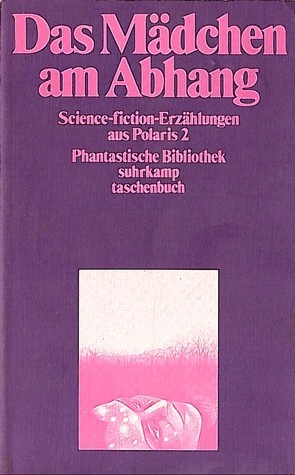
So back to square one. I remembered that the book containing the story was called Das Mädchen am Abhang (“The girl at the slope”). A Google search revealed the author’s name. From there, ChatGPT finally identified the story as Die Flüssige Materie (The Liquid Substance) by Ilja Warszawski, which has never been translated into English and hence eluded the internet and AI.
It’s fascinating that a published story that has become so ingrained in Elke’s and my memory is largely obscure to the rest of the world.